
Why Epoxy Is the Perfect Medium for Space-Inspired Art

Updated: Feb 24
Epoxy has become an ideal medium for space-inspired art because it allows light, depth, and motion to exist within the same surface. Unlike traditional materials, epoxy can be layered, illuminated, and manipulated in ways that mirror the vastness and unpredictability of space itself. That combination makes it uniquely suited to artists exploring cosmic themes.
When Martin Eichinger began experimenting with epoxy, it wasn’t with the intention of chasing trends or redefining categories. He was looking for a way to express ideas that traditional materials struggled to hold—ideas rooted in scale, light, and the feeling of standing at the edge of something immeasurable.

Space, as a subject, doesn’t behave politely. It isn’t flat or contained. It stretches, recedes, collapses, and reveals itself slowly. Epoxy, as a medium, behaves much the same way.
Epoxy Allows Artists to Build Depth Through Layers
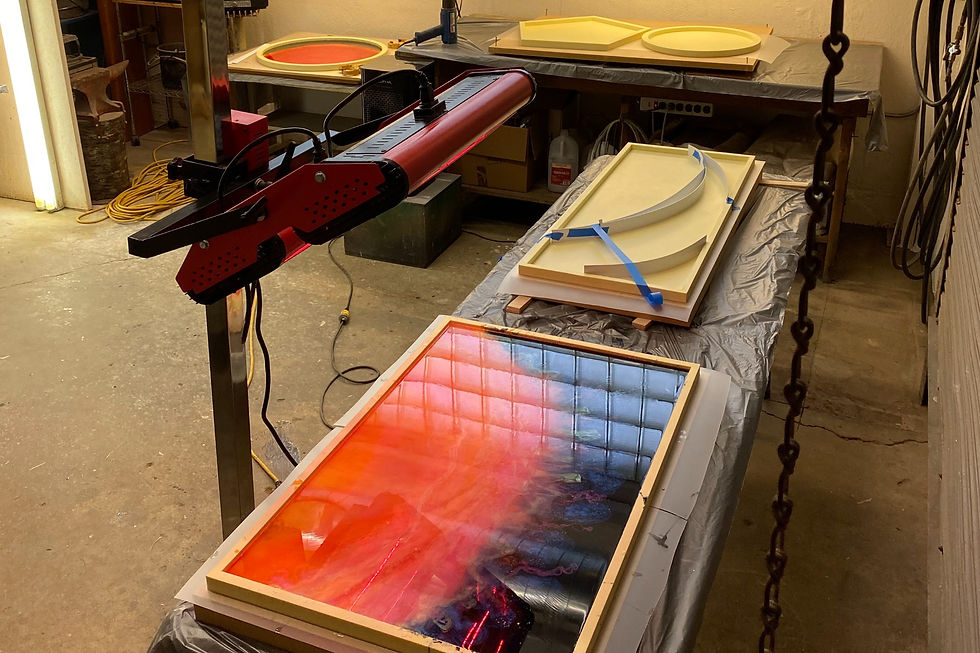
One of epoxy’s most defining characteristics is its ability to be poured and cured in layers. Each layer becomes part of a larger whole, allowing artists to create depth that feels dimensional rather than illustrative.
In space-inspired work, this matters. Nebulae, galaxies, and cosmic phenomena are not single planes. They exist in stacked distances, with light and matter suspended at varying depths. Epoxy makes it possible to physically build that experience into the artwork itself.
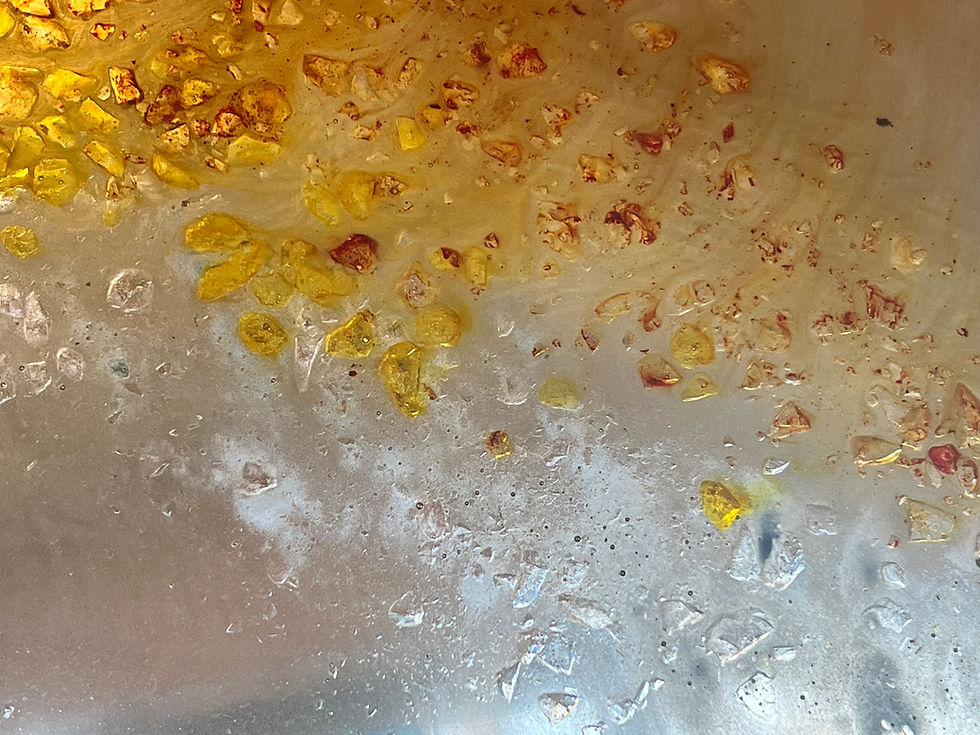
Unlike paint alone, which sits on the surface, epoxy allows color, texture, and form to exist below it—sometimes several layers deep—creating a sense of scale that pulls the viewer inward.
Why Light and Transparency Matter in Space-Inspired Art
Light is not just a visual element in space-inspired art; it’s part of the subject itself. Stars glow. Gas clouds diffuse light. Darkness isn’t empty—it’s active.
Epoxy’s transparency allows light to pass through, reflect, and refract in ways that opaque materials cannot. Depending on how a piece is lit, entirely different details can emerge. What feels subtle in one environment can become dominant in another.
This interaction between light and material gives epoxy-based works a sense of movement, even when the piece itself is static.
Epoxy’s Controlled Unpredictability Mirrors the Cosmos
Epoxy is precise, but it is not entirely obedient. It reacts to gravity, temperature, timing, and chemistry in ways that cannot be fully controlled.
As Eichinger has put it, “You can plan for a pour, but once the epoxy starts moving, it has a mind of its own. That’s when the piece starts to tell you what it wants to be.”
That tension between intention and outcome is part of what makes epoxy such an effective medium for space-inspired work. The material mirrors the reality of the cosmos itself—structured, governed by rules, yet always capable of surprise.
Each pour introduces variables. Each cure locks in a moment that cannot be replicated exactly. The result is work that feels less manufactured and more discovered.
A Medium That Encourages Time and Observation
Space-inspired epoxy art rarely reveals everything at once. Details emerge gradually as the eye adjusts and explores the surface.
This encourages a slower form of looking. The viewer is invited to spend time with the piece, noticing layers, shifts in color, and subtle changes in depth. The experience becomes less about immediate impact and more about sustained engagement.
For collectors, this means the work isn’t just inspired by space—it behaves like it, revealing something new depending on light, distance, and time spent with the piece.
Why Epoxy Continues to Shape Eichinger’s Work
Epoxy isn’t simply a material choice. For Eichinger, it’s a way of working that aligns with the subject matter itself.
Space demands scale, patience, and humility. Epoxy requires the same. The medium resists shortcuts and rewards careful observation. It invites collaboration between intention and chance.
In that sense, epoxy doesn’t just depict the cosmos. It participates in it—layer by layer, pour by pour.
Where to Find Epoxy Fine Art in Portland
For collectors interested in epoxy as fine art, seeing the work in person matters. Scale, depth, and the way light moves through layered resin are difficult to fully appreciate online.
In the Portland area, Eichinger Sculpture Studio and Art at the Geode Gallery offer an opportunity to experience epoxy artworks firsthand. The gallery presents space-inspired resin pieces alongside traditional sculpture, allowing viewers to compare materials and techniques in a single setting.
Comments