
Epoxy vs. Glass: The New Stained Glass of the Future

Updated: Feb 24
Epoxy is emerging as a contemporary alternative to stained glass because it allows artists to work with light, transparency, and color in more flexible and expressive ways. While stained glass relies on rigid structure and fixed composition, epoxy enables layered depth, internal movement, and evolving visual effects that feel better suited to modern spaces and ideas.
This doesn’t replace stained glass. It extends the tradition.
Where stained glass once interpreted light for sacred and architectural spaces, epoxy is beginning to reinterpret it for contemporary art.

What Stained Glass Traditionally Does Well
Stained glass has always been about controlling light. Colored glass panels filter sunlight into structured compositions, creating narrative, symbolism, and atmosphere through carefully arranged shapes.
Its strength lies in permanence. Once assembled, the image is fixed. The glass holds its form, and the lead lines enforce structure. The result is clarity and stability—qualities that made stained glass ideal for churches and monumental spaces.
But that same rigidity also limits what the medium can express.
How Epoxy Approaches Light Differently
Epoxy doesn’t divide light into sections. It absorbs, diffuses, and reflects it internally.
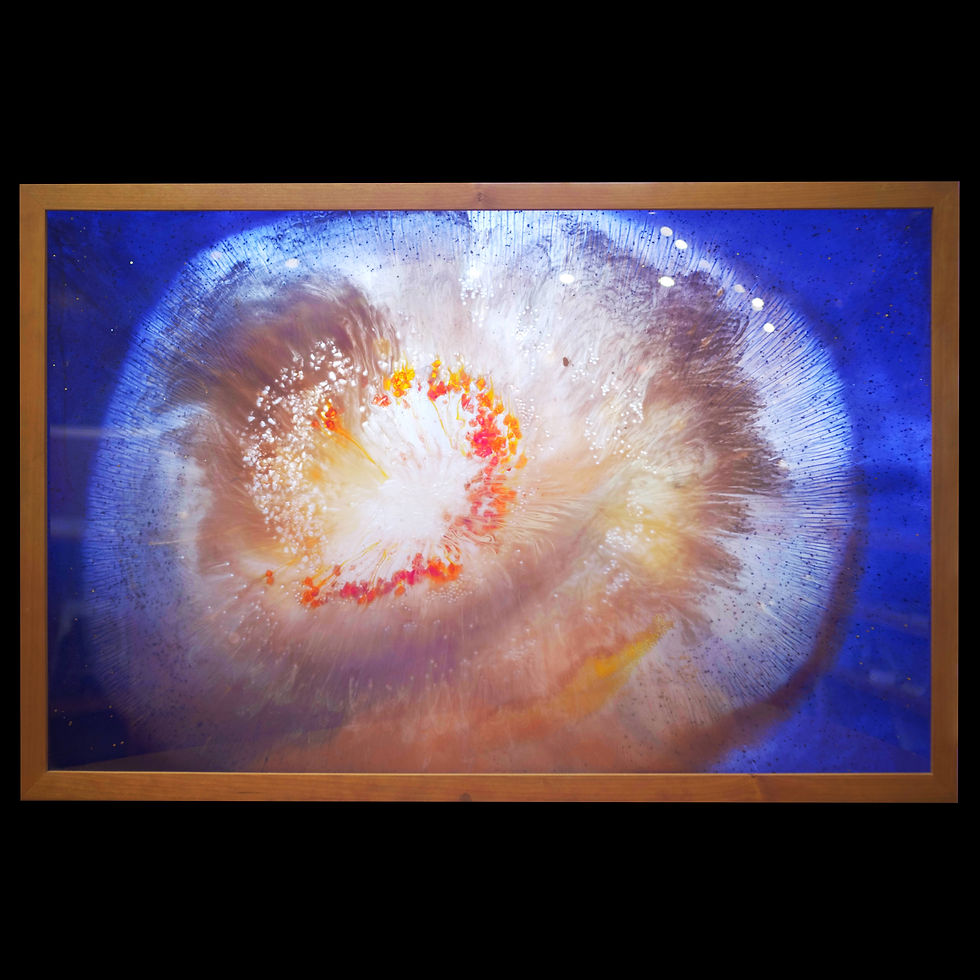
Rather than light passing through flat panes, epoxy allows light to move within the material itself. Color exists at different depths. Transparency varies across the surface. Subtle changes in lighting reveal different aspects of the work.
This gives epoxy-based art a sense of motion and dimensionality that stained glass cannot achieve without structural complexity.
Layering Instead of Lead Lines
In stained glass, lead lines define boundaries. In epoxy, layers do the work.
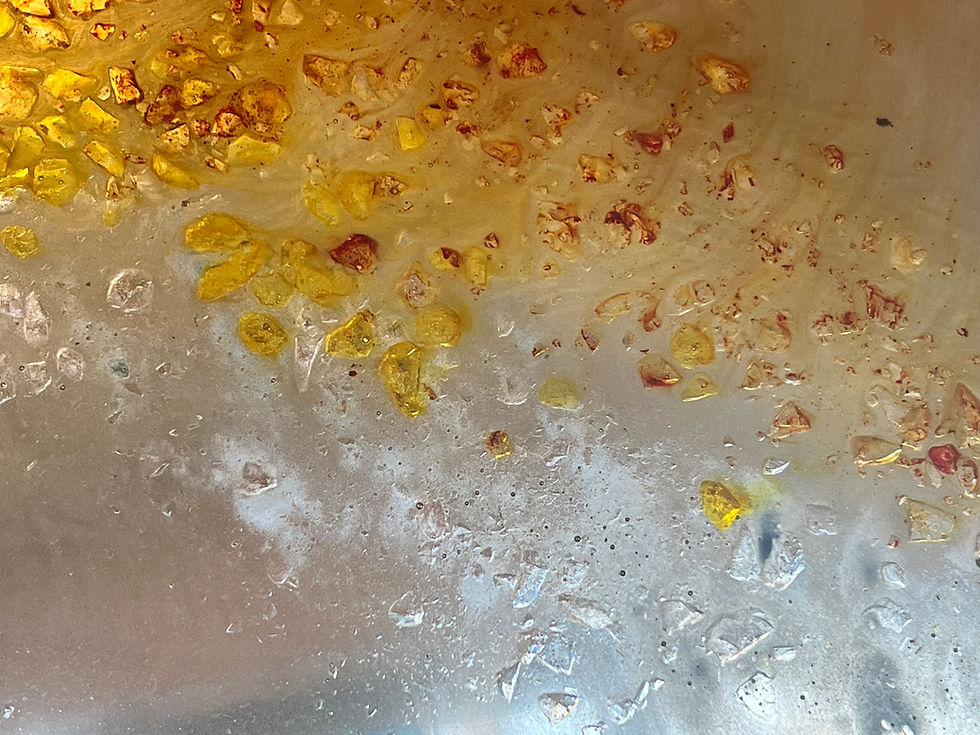
Artists build depth by pouring epoxy in stages, embedding pigments, mica powders, and textures between layers. Each layer interacts with the next, creating transitions rather than hard divisions.
The result feels less illustrative and more atmospheric. Instead of outlining shapes, the medium suggests them.
This shift mirrors how contemporary viewers experience light today—not as something segmented, but as something immersive.
Controlled Unpredictability as a Feature
Stained glass demands precision. Epoxy allows for variation.
Epoxy reacts to gravity, temperature, and timing. While artists guide the process, the material retains agency. Subtle changes during curing introduce forms that cannot be perfectly replicated.
This unpredictability doesn’t weaken the work. It strengthens it.
Each piece becomes a record of conditions rather than a repeated design, aligning epoxy with modern ideas about process, uniqueness, and material honesty.
Why Epoxy Feels Like the Next Evolution
Calling epoxy “the new stained glass” isn’t about novelty. It’s about function.
Both mediums translate light into meaning. Both rely on transparency and color. But epoxy expands what’s possible by allowing depth, motion, and internal complexity to coexist in a single surface.
Where stained glass was tied to architecture, epoxy is freer. It adapts to galleries, private collections, and contemporary interiors without structural constraints.
It’s not a replacement. It’s a continuation—updated for how art is made and experienced today.

Where to See Epoxy Fine Art in Portland
Seeing epoxy fine art in person is essential. Light behaves differently across layered epoxy than it does on glass, and subtle shifts in depth and transparency are difficult to capture digitally.
In Portland, Eichinger Sculpture Studio and Art at the Geode Gallery offer the opportunity to experience epoxy works firsthand. Displayed alongside traditional sculpture, these pieces show how epoxy-based art functions within a fine art context rather than as decorative material.
Viewing the work in person clarifies why epoxy has become a compelling contemporary counterpart to stained glass.
Comments